How to Care for Air Plants: The Complete Beginner's Guide
Whether you just brought home your first air plant or you're looking to improve your plant-care routine, this complete beginner's guide will show you everything you need to know about caring for air plants.
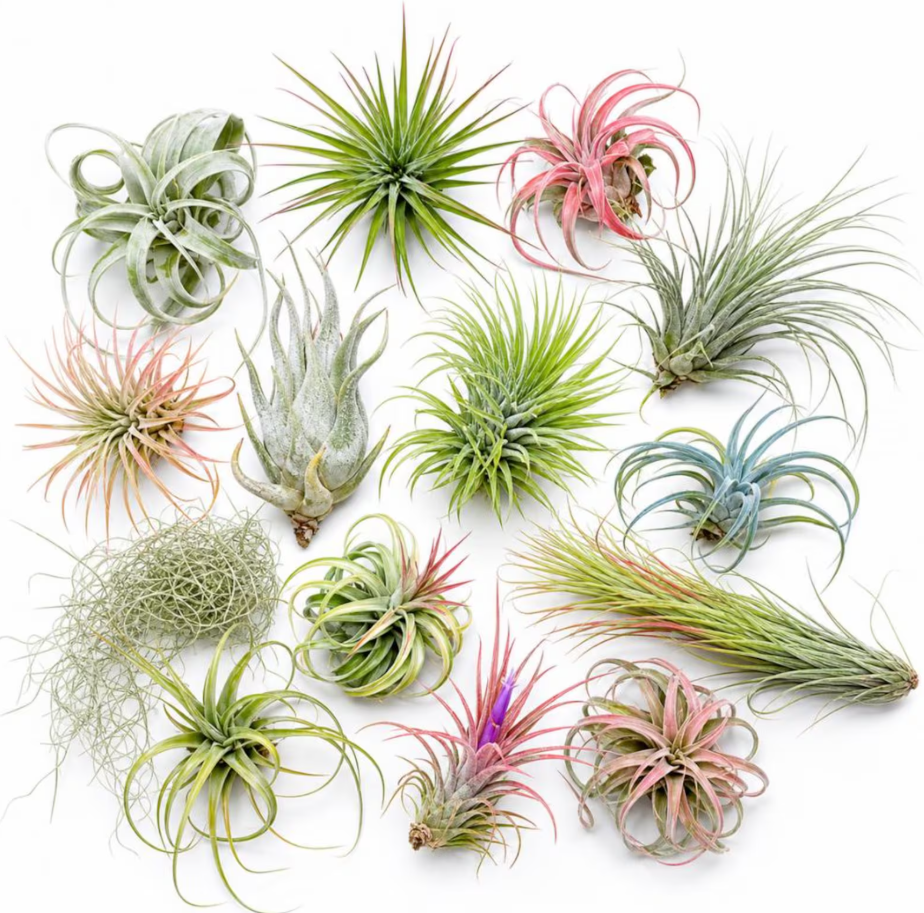
Air plants are one of the easiest and most fascinating plants to add to your home. They don't need traditional potting soil, can be displayed in creative ways, and come in hundreds of unique shapes and sizes.
But "low maintenance" doesn't mean "no maintenance." Air plants, also known as Tillandsia, still need the right combination of water, light, air circulation, and occasional feeding to stay healthy.
Whether you just brought home your first air plant or you're looking to improve your plant-care routine, this complete beginner's guide will show you everything you need to know about caring for air plants.
What Are Air Plants?
Air plants belong to the Tillandsia genus and are members of the bromeliad family. Unlike most houseplants, they don't need to grow in soil.
In their natural habitats, air plants often grow attached to trees, rocks, and other surfaces. They absorb moisture and nutrients primarily through specialized structures on their leaves called trichomes.
Despite their name, air plants don't actually live on air alone. They need water, light, nutrients, and good air circulation to thrive.
How Much Light Do Air Plants Need?
Light is one of the most important factors in keeping an air plant healthy.
Most air plants prefer bright, indirect light. A location near a bright window is usually ideal, but avoid placing them directly against a window where intense afternoon sunlight can scorch their leaves.
Good locations for air plants include:
- Near an east- or north-facing window
- A few feet away from a bright south- or west-facing window
- In a bright bathroom with natural light
- Under suitable full-spectrum grow lights
Some varieties can tolerate more direct sunlight, particularly when they are gradually acclimated to it. However, intense direct summer sun can cause leaf damage and dehydration.
How can you tell if your air plant is getting enough light?
Healthy air plants generally have firm leaves and good overall color. Slow growth, pale coloring, or a plant that seems weak may indicate insufficient light.
On the other hand, brown, crispy patches can indicate too much intense sunlight or inadequate moisture.
How Often Should You Water an Air Plant?
Watering is where many first-time air plant owners run into trouble.
Although air plants don't grow in soil, they still need regular watering. In most homes, thoroughly soaking an air plant about once a week is a good starting point.
Your home's temperature, humidity, airflow, plant variety, and season can all affect how frequently it needs water.
The Soaking Method
A simple way to water most air plants is:
- Fill a bowl or container with room-temperature water.
- Completely submerge the air plant.
- Let it soak for approximately 20–30 minutes.
- Remove the plant.
- Gently shake off excess water.
- Place it upside down or on its side in a location with good air circulation.
- Allow it to dry completely before returning it to its display.
Drying is extremely important. Water trapped between the leaves or inside the plant can lead to rot.
Can You Mist an Air Plant?
Yes, but misting alone may not provide enough moisture for many air plants.
Misting can be useful between thorough waterings, particularly in dry indoor environments, but regular soaking or thorough rinsing is generally a better primary watering method.
How Do You Know When an Air Plant Needs Water?
Your air plant may show several signs of dehydration.
Look for:
- Leaves that feel softer or curl inward
- Increased browning at the tips
- A plant that looks unusually dry or shriveled
- Leaves becoming less firm than usual
Keep in mind that different Tillandsia varieties naturally have different appearances. Some have fuzzy, silvery leaves while others are smooth and green, so it's important to become familiar with what your particular plant normally looks like.
Air Plant Care: The Most Important Rule
Never leave an air plant sitting in water.
Air plants need moisture, but they also need to dry out between waterings. After soaking, make sure excess water drains away and that the plant has plenty of airflow.
This is particularly important for air plants displayed inside decorative containers, terrariums, shells, or other enclosed spaces.
If your air plant is displayed in a container without drainage, remove it for watering and allow it to dry thoroughly before putting it back.
Do Air Plants Need Fertilizer?
Air plants can benefit from occasional fertilizing, particularly during active growth.
Use a fertilizer specifically formulated for air plants, bromeliads, or Tillandsia and follow the product's dilution instructions.
Generally, fertilizing once a month during the growing season is sufficient for many air plants. Avoid over-fertilizing, since too much fertilizer can damage the plant.
What Temperature Is Best for Air Plants?
Air plants generally do well at comfortable household temperatures.
Aim for approximately 50–90°F, while avoiding prolonged exposure to extreme heat, freezing temperatures, or sudden temperature changes.
Keep air plants away from:
- Heating vents
- Radiators
- Air-conditioning vents
- Cold drafts
- Extremely hot windows
A comfortable room with good indirect light and air circulation is usually an excellent environment.
Why Is Air Circulation Important?
Good airflow is one of the secrets to successful air plant care.
After watering, air circulation helps the plant dry properly and reduces the chance of rot.
This doesn't mean you need a fan blowing directly on your plant. Simply placing it somewhere with normal household airflow is usually enough.
If your air plant is kept in a terrarium or enclosed display, make sure the container provides adequate ventilation.
How Do You Display Air Plants?
One of the best things about air plants is that you can get creative with how you display them.
They can be placed in:
- Decorative bowls
- Hanging holders
- Driftwood
- Wall displays
- Glass globes
- Ceramic planters
- Shells
- Air plant stands
- Terrariums with good ventilation
When attaching an air plant to a decorative object, avoid using materials that can trap moisture around the base.
Also avoid using copper wire or copper-containing materials, as copper can be harmful to Tillandsia.
Can Air Plants Live in a Bathroom?
Yes! Bathrooms can be excellent locations for air plants because they often have naturally higher humidity.
However, humidity doesn't replace watering.
A dark bathroom without sufficient natural or artificial light isn't a good location. Your air plant still needs adequate light to photosynthesize and grow.
A bright bathroom with good ventilation can be an especially nice environment for Tillandsia.
Do Air Plants Bloom?
Yes, many air plants produce beautiful flowers.
Depending on the species, blooms can range from subtle flowers to vibrant displays of pink, purple, red, orange, or yellow.
Flowering generally occurs when the plant reaches maturity and receives appropriate care.
After flowering, many Tillandsia varieties produce offsets, often called "pups," around the base of the mother plant.
What Are Air Plant Pups?
Pups are baby air plants that develop from the parent plant.
As the pup grows, you can eventually separate it from the mother plant once it reaches approximately one-third to one-half the size of the parent, depending on the variety.
Use clean, sharp scissors or gently separate the pup if it comes away easily.
Don't rush the process. Allowing the pup to develop a strong base increases its chances of becoming a healthy independent plant.
Common Air Plant Problems
Brown Leaf Tips
Brown tips can be caused by dehydration, excessively dry conditions, intense sunlight, or other environmental stress.
Try reviewing your watering schedule and light exposure.
Mushy or Black Leaves
Mushy, dark, or blackening tissue can be a sign of rot.
This often occurs when an air plant remains wet for too long, particularly when water becomes trapped in the center of the plant.
Improve airflow and make sure the plant dries completely after watering.
Leaves Curling
Curling leaves can be a sign that the plant needs more moisture, although some Tillandsia naturally have curled leaves.
Check the plant's overall appearance and your recent watering routine before making major changes.
Pale or Weak Growth
Insufficient light may result in weak or slow growth.
Move the plant gradually toward a brighter location with plenty of indirect light.
7 Beginner Air Plant Care Tips
If you want to keep things simple, remember these seven rules:
- Give your air plant bright, indirect light.
- Soak or thoroughly rinse it about once a week as a starting point.
- Shake off excess water after watering.
- Let the plant dry completely.
- Provide good air circulation.
- Fertilize occasionally with a suitable Tillandsia fertilizer.
- Pay attention to your individual plant and adjust care based on its environment.
How Long Do Air Plants Live?
With proper care, air plants can live for several years.
Their lifespan varies considerably by species and growing conditions. Some varieties mature relatively quickly, while others take several years to reach maturity.
Once mature, many air plants flower and produce pups, allowing you to continue growing new plants even after the original plant completes its natural life cycle.
Are Air Plants Really Easy to Care For?
Absolutely—but the key is understanding what they actually need.
The biggest mistake is assuming that because an air plant doesn't need soil, it doesn't need much attention. In reality, successful air plant care comes down to four essentials:
Light + Water + Airflow + Time
Give your Tillandsia the right environment, and these unusual little plants can become beautiful, long-lasting additions to your home.
Bring Home an Air Plant
Looking for an easy-care plant with plenty of personality? Air plants make wonderful gifts and are perfect for desks, shelves, bathrooms, kitchens, and creative plant displays.
At Enchanted Blossoms, we love helping our customers find unique plants and gifts for every occasion. Stop by our boutique in Bell Works to explore our current selection of plants, planters, and plant-care gifts.
Whether you're buying your first Tillandsia or adding another unusual plant to your collection, we're happy to help you choose the right plant and learn how to care for it.